Engineering services for production Data, AI, Cloud and Software.
Six connected practices cover analytics, data engineering, AI, cloud platforms, software and managed operations from architecture through production.
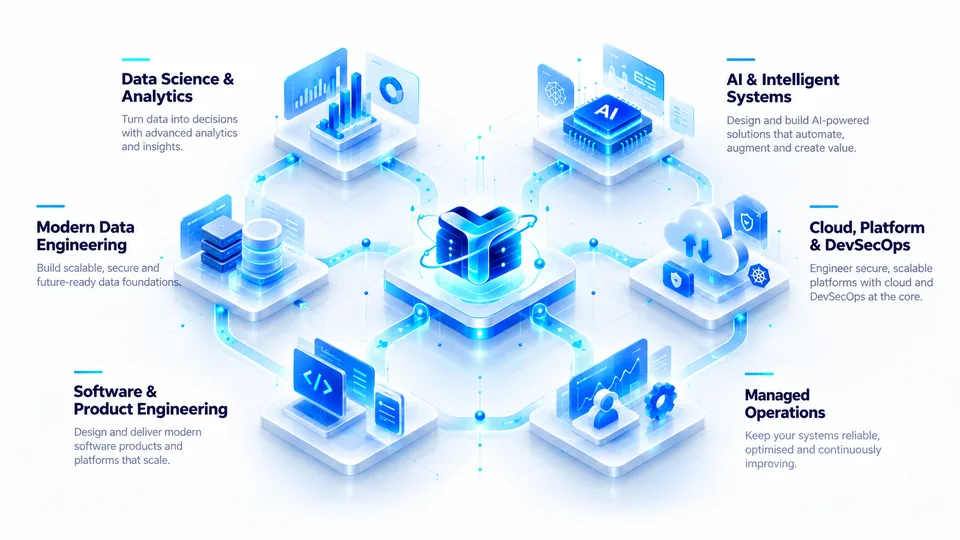
Match the practice to the delivery problem.
Analytics explains, measures and predicts. AI operationalises intelligent capability. Data Engineering creates the trusted foundation. Cloud and Platform Engineering makes infrastructure repeatable. Software exposes capability through products and integrations. Managed Operations keeps production systems reliable.
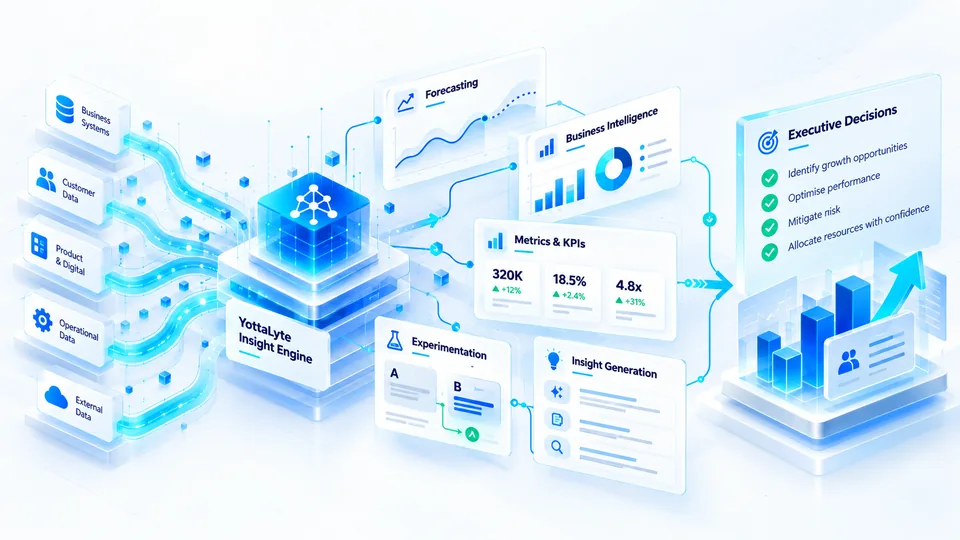
Data Science & Analytics
Turn trusted data into metrics, forecasts, experiments and decision-support products.
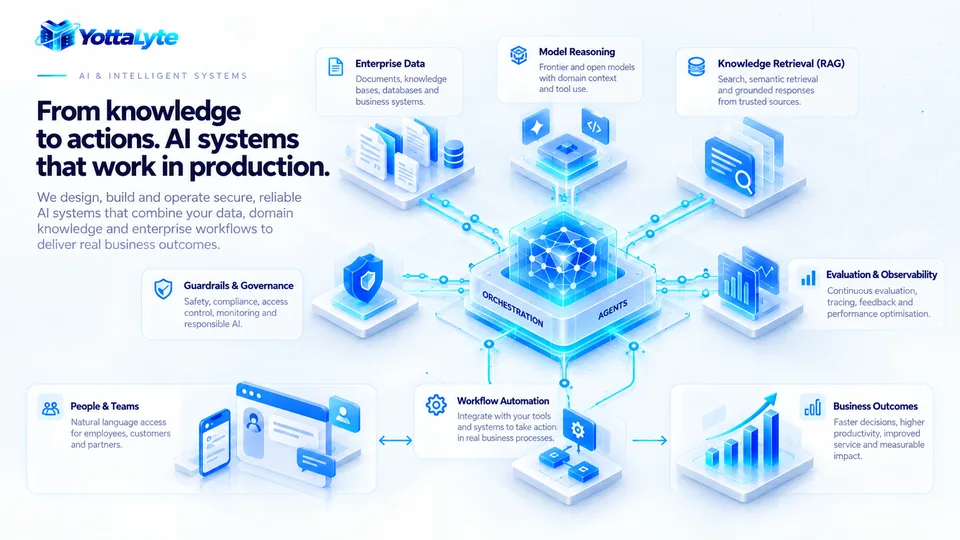
AI & Intelligent Systems
Move ML, GenAI, RAG and agent workflows from prototype into controlled production.
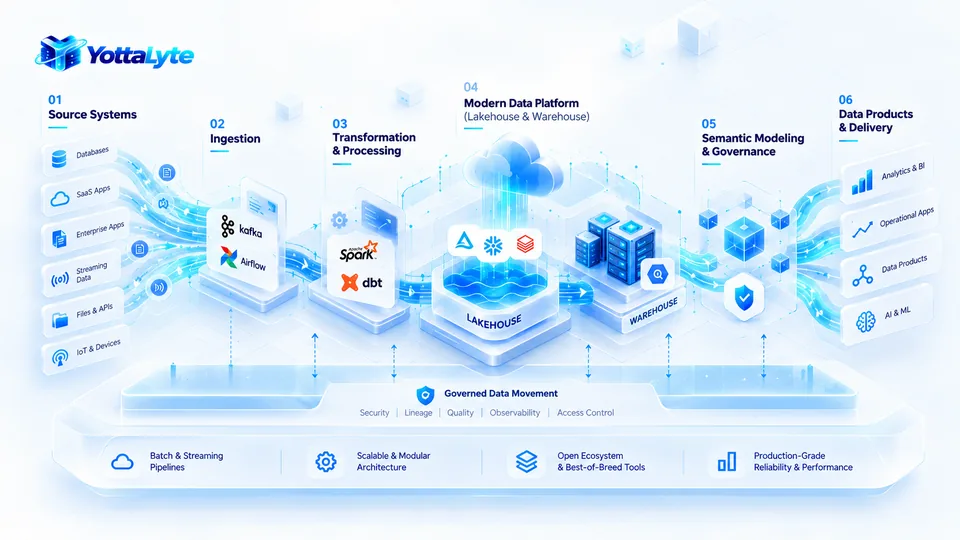
Modern Data Engineering
Create reliable pipelines, lakehouse platforms, streaming systems and governed data products.
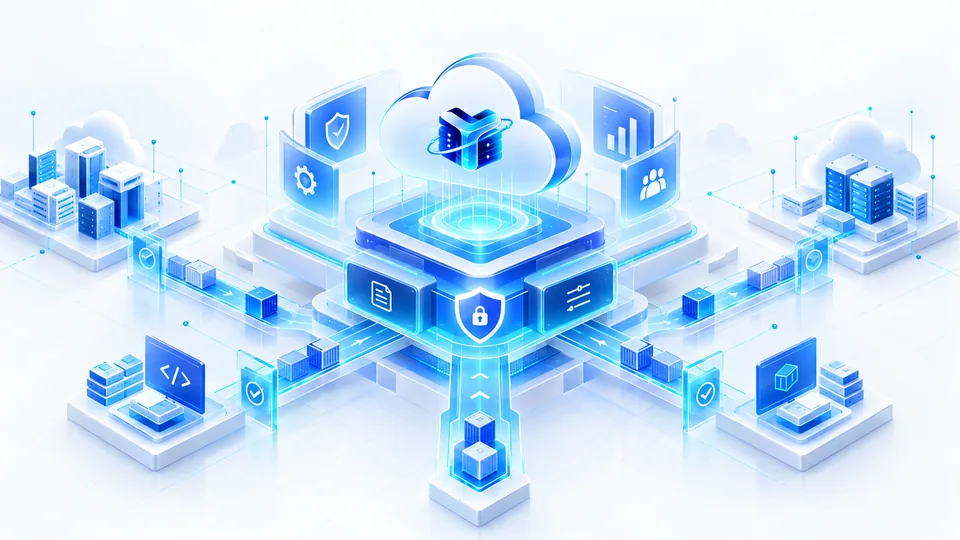
Cloud, Platform & DevSecOps
Make infrastructure repeatable with cloud foundations, IaC, Kubernetes and CI/CD.
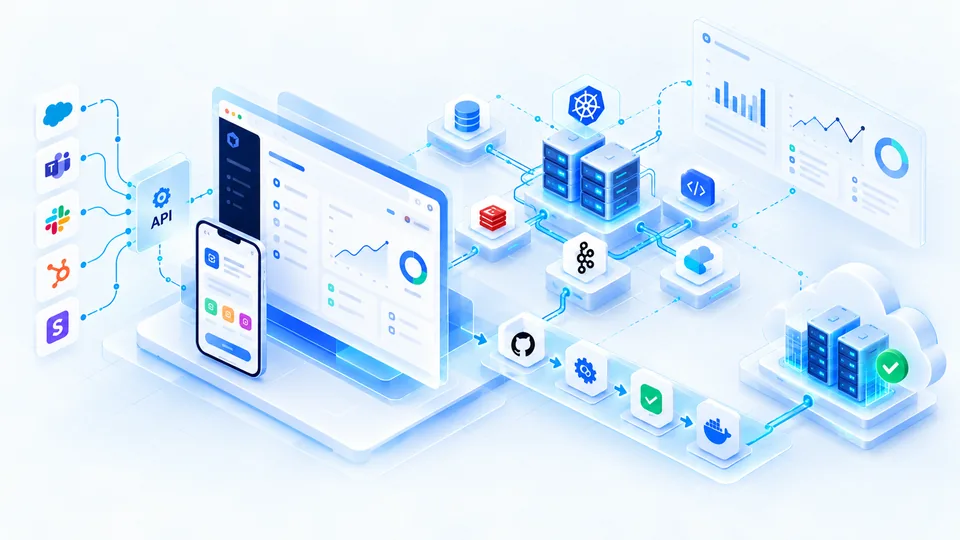
Software & Product Engineering
Build APIs, backend services, integrations and product surfaces around data and AI.
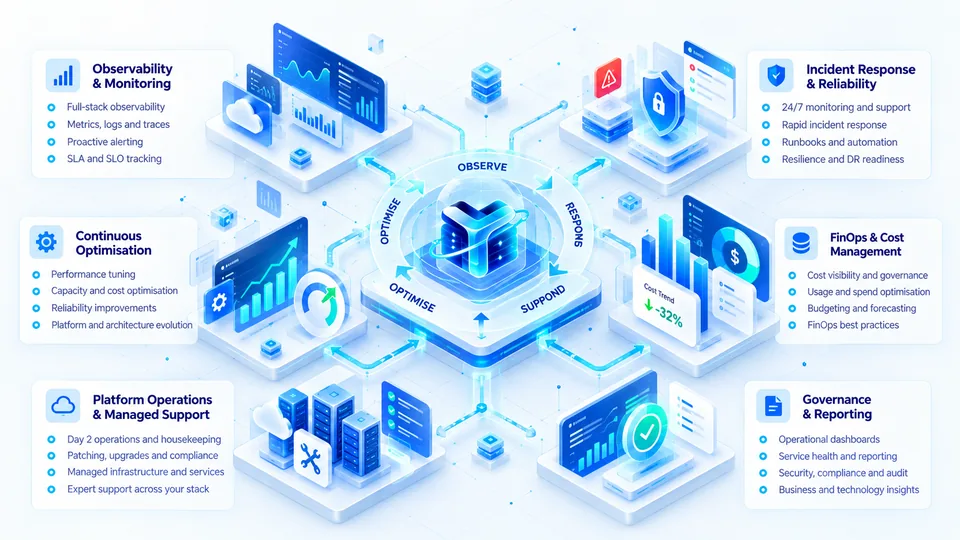
Managed Operations
Run production systems with monitoring, incident support, optimisation and FinOps.
Define commercial and delivery ownership before mobilisation.
Partner engagement models are maintained on the Partners page so scope, client relationship, brand visibility and run ownership have one source of truth.
Architecture and operating model before implementation.
Every engagement should establish the business problem, technical constraints, ownership boundaries and target operating model before implementation accelerates.
Frame the problem
Clarify business outcomes, constraints, dependencies and ownership before implementation starts.
Define the system
Set architecture, interfaces, security controls, acceptance criteria and the operating boundary.
Build for production
Engineer, test, integrate and release the agreed capability through controlled delivery.
Run and improve
Handover cleanly or continue with monitoring, reliability, optimisation and managed support.
Questions teams ask before implementation.
Yes. The target architecture can be designed around an existing AWS, Azure or Google Cloud environment, including current identity, networking, security and data-platform constraints. The first step is to map what should be retained, changed or retired.
Yes. Cross-practice work is appropriate when the delivery dependency is real—for example, a trusted data foundation feeding analytical models and an AI application. The scope is still divided into explicit artefacts, interfaces and ownership boundaries.
Yes. YottaLyte can implement within an architecture owned by a partner or enterprise team, or help refine the implementation design where gaps remain. Architecture decisions, assumptions and handover artefacts are documented as part of the work.
Where required, the initial implementation can transition into monitoring, reliability, optimisation, FinOps and support. The operational boundary and service expectations are agreed separately from the build scope.